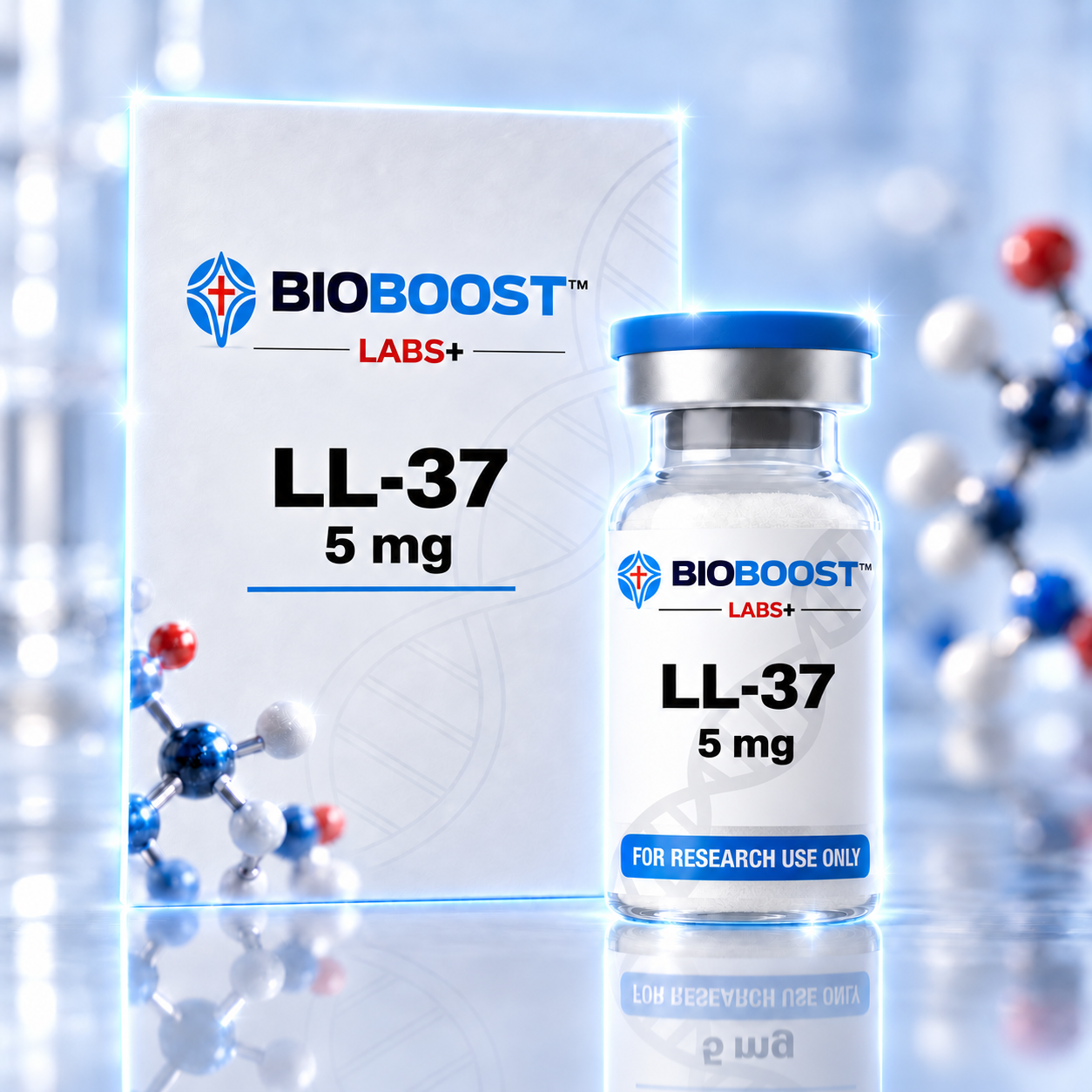
LL-37 5mg
LL-37 is a synthetic cathelicidin-class host defense peptide supplied as a research-grade compound for in vitro laboratory use. It is studied in non-clinical models for its role in antimicrobial membrane interaction dynamics and immune signaling pathway research. For in vitro laboratory research use only. Not for human or animal use.
$56.25
In stock
LL-37 (5mg) – Cathelicidin-Class Host Defense Peptide Research Compound
LL-37 is a synthetic cathelicidin peptide engineered to reflect one of the most extensively studied host-defense molecules in modern biological research. Studied in controlled laboratory environments for its role in antimicrobial membrane interaction dynamics, immune signaling pathway research, and cellular response mechanisms in non-clinical models.
Functioning as a cationic amphipathic peptide, LL-37 exhibits strong electrostatic attraction to negatively charged microbial membranes. In controlled in vitro and preclinical models, this interaction is studied in vitro for its role in membrane permeability dynamics and structural interactions across microbial model systems.
Beyond direct antimicrobial effects, LL-37 is widely investigated for its regulatory role in complex biological pathways. Research has shown involvement in cytokine signaling modulation, chemotactic response activity, and structural remodeling processes within epithelial and connective tissue models.
LL-37 is not a single-function compound—it is a multi-domain signaling peptide with broad relevance across host-defense research, biofilm disruption studies, and advanced cellular communication models.
Key areas of research include:
- Membrane-targeting antimicrobial mechanisms across bacterial, viral, and fungal systems
- Biofilm disruption and inhibition in resistant microbial environments
- Modulation of inflammatory signaling cascades and cytokine expression
- Cellular migration, proliferation, and extracellular matrix interaction models
Manufactured with precision and validated through rigorous analytical testing, this 5mg lyophilized preparation delivers elite-grade purity, structural integrity, and consistency required for high-level research environments.
Product Specifications:
Sequence: LLGDFFRKSKEKIGKEFKRIVQRIKDFLRNLVPRTES
Molecular Class: Cathelicidin-derived peptide
Purity: 99.73% (HPLC verified)
Appearance: White crystalline powder
Endotoxin Level: ≤0.05 EU/mL (PASS)
Form: Lyophilized powder
Quantity: 5mg per vial (actual content ~5.03mg)
For Research Use Only. Not for human or veterinary applications.
LL-37 is widely utilized in preclinical and in vitro research models investigating host-defense peptides, microbial membrane interactions, and immunological signaling pathways. It has been extensively studied for its role in disrupting microbial biofilms, modulating cytokine expression, and influencing cellular migration and tissue remodeling processes. Ongoing research continues to explore its impact on epithelial barrier function, inflammatory signaling cascades, and peptide-mediated communication within complex biological systems.
Key Features:
Compound Name: LL-37 (Cathelicidin)
Sequence: 37-amino acid cationic antimicrobial peptide
Family: Cathelicidin
Form: Lyophilized peptide powder
Purity: ≥98% (HPLC-verified)
Molecular Weight: ~4493.3 g/mol
Storage: -20°C, protected from light and moisture
Supplied as: 5mg lyophilized peptide per vial
Intended Use: In vitro laboratory research only. Not for human or animal use.
This product is intended strictly for laboratory research use by qualified professionals. LL-37 is not intended for human consumption, medical use, diagnosis, treatment, or therapeutic application of any kind.
By purchasing this product, you acknowledge and agree that it will be used solely within controlled research environments in accordance with applicable guidelines and standards.
This material is part of a high-purity, research-grade portfolio designed to support advanced scientific investigation.
COAs:
LL-37 5mg – COA261108 QC260991
Each batch of LL-37 is supported by third-party analytical verification to ensure identity, purity, and consistency. Documentation is provided for transparency and to support reproducibility across research applications.